
 By snap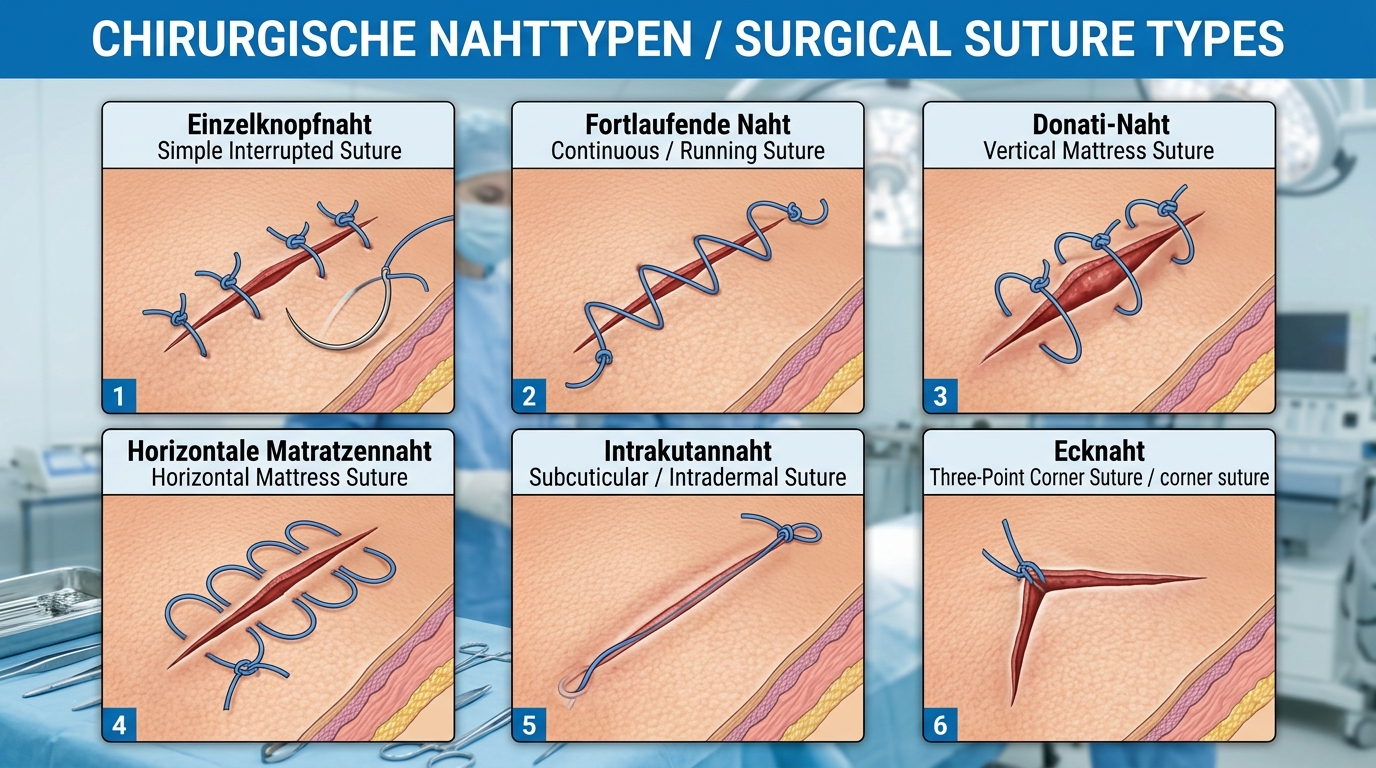
Introduction: The Thread Behind Every Recovery
Most people remember the surgeon, the diagnosis, and the moment they woke up after an operation. Very few, however, think about the thread. Yet that thread — chosen from a precise and carefully developed system called nahttypen, meaning suture types — plays a decisive role in how a wound heals, how a scar forms, and how quickly a patient returns to normal life. Understanding the different categories of sutures helps patients, students, and curious minds appreciate the extraordinary level of detail that modern surgical care demands. Furthermore, it reveals how materials science, biology, and clinical skill combine in ways that most people never see.
What Nahttypen Actually Means
The German Root and Its Global Relevance
The word “nahttypen” comes from German medical terminology. “Naht” means seam or suture, and “typen” means types. Together, they describe the broad classification system surgeons use when selecting the right thread for a specific wound or procedure. Additionally, this classification system has become universally recognized across surgical training programs worldwide.
German medical literature contributed enormously to the systematic study of wound closure techniques during the nineteenth and twentieth centuries. Consequently, many classification systems in surgery carry German-language roots that practitioners still use today. Understanding nahttypen therefore means entering a rich tradition of precise, evidence-based thinking about how the human body heals.
Why Classification Matters in Surgery
Not every wound is the same. A deep abdominal incision, a superficial skin cut, and a torn tendon each demand different closure strategies. Therefore, surgeons cannot rely on a single universal suture material for every situation. The classification system gives clinical teams a shared language and a clear decision-making framework. Moreover, it allows manufacturers to develop materials tailored to specific biological environments inside the human body.
The Two Foundational Categories of Suture Types
Absorbable Sutures: Nature Does the Work
The first major division within nahttypen separates absorbable sutures from non-absorbable ones. Absorbable sutures dissolve over time through natural biological processes. The body’s enzymes or hydrolysis gradually break down the suture material, eliminating the need for a removal procedure. Furthermore, this makes absorbable options ideal for internal tissues that patients cannot easily access from outside the body.
Surgeons commonly choose absorbable sutures for deep tissue layers, muscle closures, and internal organ repairs. Additionally, they work well in areas where patients would struggle to tolerate repeated follow-up visits for stitch removal. The convenience factor matters enormously in busy healthcare systems and in lower-resource settings where follow-up access is limited.
However, absorbable sutures come with an important caveat. Their degradation timeline must match the tissue’s healing speed precisely. A suture that breaks down too early leaves a wound unsupported before it has gained sufficient strength. Conversely, one that persists too long can trigger a chronic inflammatory response. Therefore, selecting the right absorbable material requires careful thought about the specific tissue and its biological behavior.
Natural Versus Synthetic Absorbable Materials
Within absorbable sutures, surgeons further distinguish between natural and synthetic materials. Natural absorbable sutures, such as catgut derived from animal intestinal tissue, represent one of the oldest suture materials in recorded history. Moreover, catgut absorbs relatively quickly and stimulates a moderate tissue response. Consequently, its use has declined in many countries as synthetic alternatives have proven more predictable.
Synthetic absorbable sutures, on the other hand, offer controlled and consistent degradation profiles. Materials like polyglycolic acid and poliglecaprone break down through hydrolysis at predictable rates, giving surgeons reliable timelines. Furthermore, they trigger less tissue inflammation than natural alternatives. As a result, synthetic options now dominate most modern surgical settings.
Non-Absorbable Sutures: Built for the Long Haul
Non-absorbable sutures represent the other fundamental branch of nahttypen. These materials resist biological degradation and maintain their structural integrity over extended periods. Consequently, they provide durable support in situations where permanent or long-term mechanical reinforcement matters greatly.
Surgeons rely on non-absorbable sutures for skin closures, cardiovascular repairs, hernia mesh fixation, and tendon reconstruction. In many of these applications, the tissues involved heal slowly or experience ongoing mechanical stress. Therefore, a temporary absorbable option would fail before the repair had achieved true biological stability.
Non-absorbable sutures come in two forms. Some remain in the body permanently, becoming incorporated into surrounding fibrous tissue over time. Others are placed temporarily and removed once the surgeon confirms adequate healing. Additionally, the choice between permanent and removable placement depends on location, cosmetic concerns, and patient-specific healing capacity.
Structural Classification: Monofilament and Multifilament
The Single-Strand Advantage
Beyond absorbability, surgeons classify suture types by their physical structure. Monofilament sutures consist of a single unbroken strand of material. This smooth structure allows the suture to pass through tissue with minimal resistance, reducing trauma at the wound edges. Furthermore, the unbroken surface gives bacteria fewer opportunities to establish themselves along the suture length, lowering infection risk significantly.
Monofilament options therefore work particularly well in contaminated or infection-prone environments. Additionally, their smooth surfaces make them popular in cardiovascular surgery, where reduced tissue trauma and infection prevention carry especially high stakes. However, monofilament sutures require more careful handling because they tend to retain the memory of their packaged shape and can be less forgiving during knot tying.
The Braided Structure and Its Trade-Offs
Multifilament sutures twist or braid multiple fine strands together into a single thread. This construction gives them superior flexibility and handling characteristics compared to monofilament options. Moreover, multifilament sutures hold knots more securely, making them easier to work with in technically demanding procedures.
The trade-off lies in surface area. The braided structure creates microscopic spaces where bacteria can shelter, potentially increasing infection risk in vulnerable patients. Consequently, surgeons weigh this risk carefully against the practical benefits of easier handling and stronger knot security. In clean surgical environments with proper antibiotic protocols, multifilament sutures perform excellently across a wide range of applications.
Common Suture Materials and Their Specific Roles
Silk: The Classic Multifilament Choice
Silk sutures represent one of the oldest and most familiar materials in surgical history. Surgeons have used silk for centuries because of its outstanding handling qualities and reliable knot performance. Furthermore, silk remains widely available and relatively affordable, making it a practical choice in many settings around the world.
However, silk does trigger a measurable tissue response over time, and it lacks the strength retention of modern synthetics. Therefore, many contemporary surgeons reserve silk for specific applications such as cardiovascular procedures or situations where its handling advantages genuinely outweigh its biological limitations.
Nylon and Polypropylene: Modern Monofilament Standards
Nylon and polypropylene represent the backbone of modern non-absorbable monofilament suturing. Both materials offer excellent tensile strength, smooth surfaces, and high resistance to biological degradation. Additionally, polypropylene generates an exceptionally low tissue response, making it particularly valuable in vascular surgery and long-term implant fixation.
Nylon loses a small percentage of its strength annually through slow hydrolysis, while polypropylene maintains its strength indefinitely in the body. Consequently, surgeons choose polypropylene when they need guaranteed long-term mechanical performance. Moreover, its blue color makes it easy to identify during and after procedures, adding a practical safety advantage.
Polyglycolic Acid and Poliglecaprone: Leading Synthetic Absorbables
Polyglycolic acid sutures revolutionized absorbable suturing when they emerged as synthetic alternatives to catgut. They degrade through hydrolysis with predictable timing, retain adequate strength throughout early healing, and trigger minimal tissue reaction. Furthermore, they perform consistently across a wide range of surgical environments.
Poliglecaprone offers an even softer handling profile and faster absorption, making it particularly suitable for subcutaneous and subcuticular closures. Additionally, patients report greater comfort with poliglecaprone sutures near the skin surface. Consequently, its use in cosmetically sensitive areas has grown steadily over recent decades.
Suturing Techniques That Interact With Material Choice
Continuous Versus Interrupted Patterns
Material selection and suturing technique operate as a system. Continuous suturing patterns run a single thread along the entire wound length, distributing tension evenly and closing wounds rapidly. Furthermore, continuous patterns work beautifully with smooth monofilament materials that allow the thread to slide easily through tissue.
Interrupted suturing places individual stitches at regular intervals, allowing surgeons to adjust tension precisely at each point. Additionally, interrupted patterns offer greater security because one failed knot does not compromise the entire closure. Braided multifilament materials often perform particularly well in interrupted patterns because their superior knot security suits the technique’s demands.
Subcuticular and Mattress Techniques
Subcuticular suturing places stitches beneath the skin surface, producing cosmetically excellent results with minimal visible scarring. This technique favors fine monofilament or absorbable materials that lie smoothly under delicate skin tissue. Consequently, plastic surgeons and facial surgeons rely heavily on subcuticular closure for elective procedures.
Mattress sutures, conversely, provide exceptional strength in areas experiencing high mechanical tension. They grip more tissue per stitch and resist pulling forces more effectively than simple interrupted patterns. Therefore, surgeons select robust non-absorbable materials to accompany mattress techniques in demanding repair situations.
Innovation Reshaping the Future of Suture Science
Antimicrobial Coatings and Bioactive Threads
Manufacturers now coat certain sutures with antimicrobial agents to actively reduce infection risk at the wound site. Triclosan-coated sutures, for instance, release low concentrations of antiseptic material into surrounding tissue. Furthermore, clinical studies have shown measurable reductions in surgical site infections with coated sutures in specific patient populations.
Beyond infection control, researchers actively develop sutures embedded with growth factors, stem cell signals, or drug delivery capabilities. These bioactive threads aim to do more than close tissue — they actively promote faster cellular regeneration. Consequently, the boundary between a simple suture and a therapeutic device continues to blur in exciting ways.
Smart Materials and Responsive Design
The most forward-looking research in suture development explores materials that respond dynamically to tissue conditions. Researchers investigate threads that change tension in response to swelling, or release antibiotics only when bacterial activity rises beyond a threshold. Additionally, biodegradable electronic sensors woven into suture materials may one day monitor wound healing progress without requiring any additional procedures.
These developments mirror broader trends in materials science and medical technology. Therefore, surgeons and engineers increasingly collaborate in ways that blur traditional professional boundaries and accelerate innovation significantly.
The Human Dimension Behind Every Stitch
Patient Experience and Material Choice
Technical discussions about suture classification can obscure the most important truth: every stitch connects directly to a human experience. A patient recovering from abdominal surgery feels the difference between a suture that causes irritation and one that dissolves cleanly. Moreover, a child with a facial laceration carries the outcome of a surgeon’s material choice for the rest of their life in the form of a scar.
Furthermore, a patient in a rural clinic benefits enormously when their surgeon can select an absorbable suture that eliminates the need for a difficult return visit. Consequently, the science of suture classification translates into real differences in comfort, convenience, dignity, and long-term quality of life.
Training, Skill, and Material Mastery
No suture material performs at its best without skilled hands guiding it. Therefore, surgical training programs dedicate significant time to teaching residents the feel, behavior, and limitations of different materials. Additionally, experienced surgeons develop strong preferences based on years of direct observation and outcome analysis.
This human expertise remains irreplaceable even as automation and robotic assistance advance in operating rooms worldwide. Furthermore, understanding the nuances of different suture types sharpens a surgeon’s clinical judgment in ways that benefit patients far beyond any single procedure.
Conclusion: Tiny Threads, Enormous Impact
Suture classification represents one of medicine’s most refined and practically consequential knowledge systems. From the ancient use of animal-derived threads to today’s antimicrobial and bioactive innovations, the evolution of suture types reflects humanity’s relentless effort to heal more effectively, more safely, and more compassionately.
Moreover, each choice a surgeon makes within this classification system carries real weight for the person on the operating table. Understanding these distinctions — between absorbable and permanent, monofilament and braided, natural and synthetic — helps anyone appreciate the extraordinary precision that modern surgical care demands. Ultimately, it is these nearly invisible threads that hold wounds together and, in doing so, give patients the chance to rebuild their lives.