
 By snap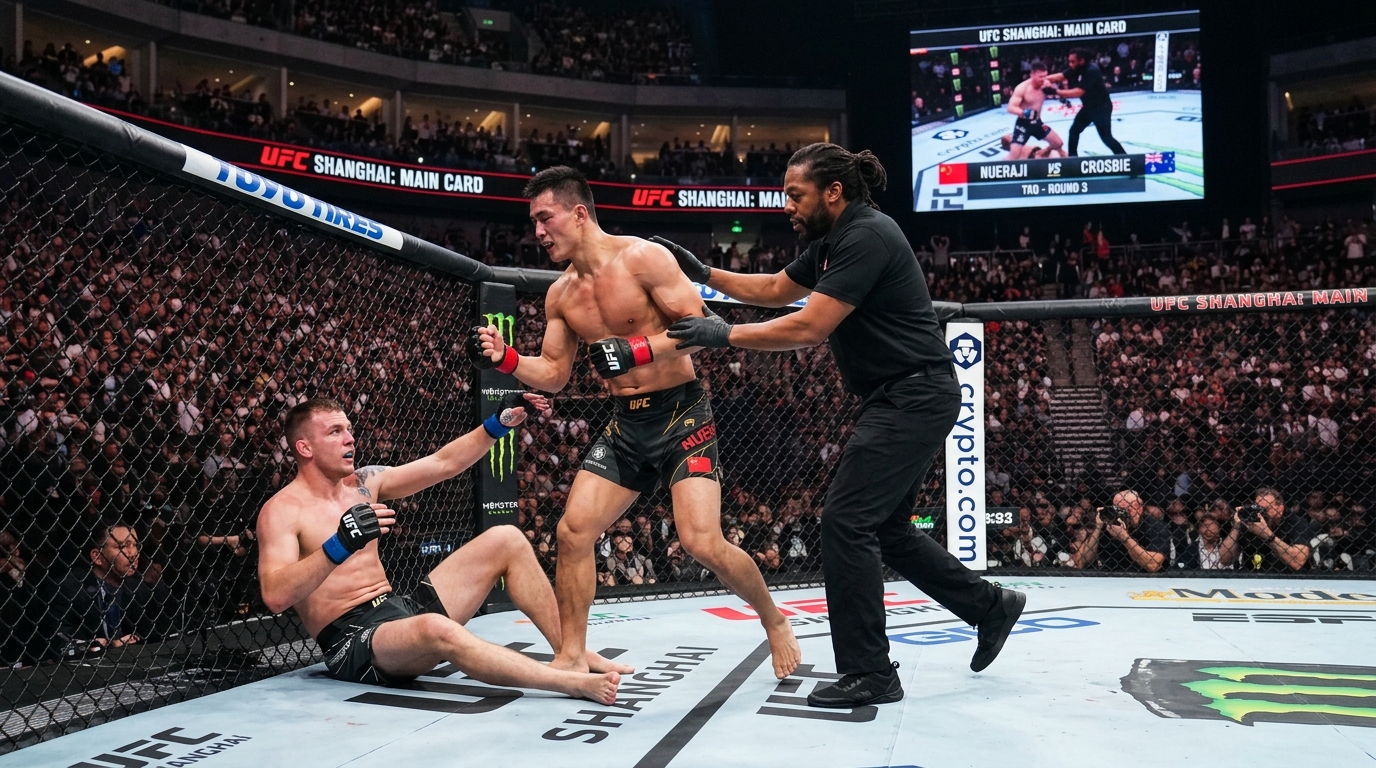
The Nueraji vs Crosbie matchup opened the UFC Shanghai main card with far more drama than most fans anticipated beforehand. Taiyilake Nueraji made his octagon debut against Ireland’s Kiefer Crosbie on August 23, 2025, and the fight quickly became one of the most discussed bouts of the year. Instead of a straightforward welterweight contest, the night delivered controversy, injury, and a finish that split opinion across the MMA community. This article breaks down what happened, why it sparked backlash, and what it means for both fighters moving forward.
Setting the Stage in Shanghai
UFC Fight Night 257 marked a significant moment for the promotion, returning to Shanghai for the first time in years. Nueraji, fighting in front of a home crowd, entered as the No. 4-ranked welterweight in the Asia-Pacific region. Meanwhile, Crosbie arrived in China searching for his first UFC victory after two consecutive losses. Consequently, the pairing carried genuine stakes beyond a simple opening bout on the card. Nueraji’s undefeated record and finishing instincts made him a heavy favorite heading into fight night.
Crosbie, a veteran with prior experience under the Bellator banner, entered as a significant underdog according to betting markets. However, his wrestling background and durability gave him a credible path to victory on paper. Additionally, analysts noted his willingness to engage in exchanges rather than simply avoiding Nueraji’s power. Therefore, while the outcome seemed likely to favor the hometown fighter, genuine intrigue surrounded how the fight might unfold. Few, however, predicted the specific controversy that would ultimately define the bout’s ending.
Fighting Styles and Pre-Fight Expectations
Nueraji built his reputation on aggressive striking, blending kickboxing instincts with sharp, calculated pressure inside the cage. His long reach and quick footwork allowed him to control distance against shorter, less mobile opponents. Meanwhile, Crosbie relied heavily on forward pressure and heavy hands, hoping to overwhelm opponents before they could establish rhythm. Consequently, analysts expected a clash between Nueraji’s precision and Crosbie’s willingness to trade in dangerous exchanges. This stylistic contrast fueled much of the pre-fight discussion among fans and MMA analysts alike.
Crosbie’s underdog status stemmed largely from his winless UFC record and visible decline in recent performances. Nevertheless, his experience against high-level competition meant he couldn’t be dismissed entirely, despite unfavorable odds. Furthermore, Nueraji’s inexperience at the UFC level introduced some uncertainty, even against a struggling opponent like Crosbie. Therefore, while most predictions favored a Nueraji finish, the exact path to victory remained genuinely uncertain beforehand. This uncertainty made the opening bout more compelling than a typical, lopsided main-card starter.
How the Fight Unfolded
The bout began with an early exchange that quickly transitioned into grappling exchanges on the canvas. Crosbie worked from his back, briefly threatening with a triangle choke that never fully materialized. Meanwhile, Nueraji began landing heavy elbows from top position, immediately establishing dominance in the ground exchange. Crosbie attempted to escape through a leg lock transition, though he lacked the control needed to finish it. Consequently, Nueraji capitalized on the scramble, securing mount position and continuing his relentless assault from above.
As the round progressed, Crosbie showed resilience, regaining guard despite absorbing significant punishment throughout the exchange. However, Nueraji’s pressure never relented, and the Chinese prospect continued landing significant strikes from dominant positions. This sustained offense set the stage for what many observers initially expected to be a clean, decisive finish. Instead, what followed became the most discussed and debated sequence of the entire fight. The controversy that emerged would ultimately overshadow Nueraji’s otherwise dominant performance inside the octagon.
The Illegal Knee and Its Aftermath
During a scramble, Nueraji landed an illegal knee strike to Crosbie’s face while his opponent remained grounded. Replays showed the blow was clearly against regulations, opening a significant cut across Crosbie’s face immediately. Referee Marc Goddard intervened, deducting two points from Nueraji for the illegal strike under unified MMA rules. However, rather than granting Crosbie the standard five-minute recovery period, Goddard restarted action after a considerably shorter pause. This decision became the central point of controversy following the fight’s conclusion in Shanghai.
Crosbie, visibly compromised and struggling to maintain balance, indicated he could continue despite the severity of the foul. Consequently, Goddard resumed the fight almost immediately, a decision many fans and analysts later criticized heavily online. Within moments, Nueraji secured another takedown and unloaded a barrage of elbows, ending the contest. The official result showed Nueraji winning by TKO at 3:33 of the first round. This rapid sequence, following directly after the illegal knee, fueled significant debate across MMA media outlets.
Reactions From Fans and Analysts
Following the finish, reactions poured in across social media, with many fans questioning the fight’s handling entirely. Some argued the bout should have ended in disqualification, given the severity and clarity of the illegal blow. Others specifically criticized Goddard’s decision to restart action so quickly after such a significant foul. Meanwhile, prominent MMA commentators debated whether Crosbie should have accepted a disqualification victory instead of continuing. Therefore, the conversation quickly shifted from Nueraji’s performance toward broader questions about referee judgment and fighter safety.
Crosbie himself voiced frustration in the days following the fight, directly addressing the situation on social media. He specifically questioned why he received significantly less recovery time than standard protocol typically requires. Additionally, he later claimed he received inadequate medical attention following the bout, including no formal concussion evaluation backstage. Consequently, these statements added further scrutiny to how the UFC handled both the fight and its aftermath. This ongoing discussion extended the story well beyond typical post-fight analysis and commentary cycles.
What This Means for Nueraji’s Career
Despite the controversy, Nueraji’s underlying performance demonstrated genuine skill and finishing ability against a determined opponent. His striking accuracy, ground control, and composure under pressure impressed observers watching his promotional debut closely. Furthermore, extending his winning streak to six consecutive victories reinforces his standing as a legitimate rising welterweight prospect. However, the controversy surrounding his win means his debut carries an asterisk many analysts continue to reference. Therefore, Nueraji’s next appearance will likely draw increased scrutiny regarding discipline and rule adherence inside the cage.
Moving forward, matchmakers will likely consider both his obvious potential and this early red flag carefully. Additionally, how Nueraji responds publicly and competitively following this controversy may shape perceptions moving into future bouts. Meanwhile, fans will watch closely to see whether similar foul issues arise in his subsequent UFC appearances. Consequently, this debut, while statistically successful, leaves Nueraji with reputation management work still ahead of him. His talent remains evident, but his conduct inside the cage will face continued examination going forward.
What This Means for Crosbie’s Future
For Crosbie, the loss extended a difficult stretch, dropping his UFC record further into underdog territory. Falling to three consecutive losses within the promotion raises legitimate questions about his roster future moving forward. However, the controversial circumstances surrounding this particular defeat may earn him some sympathy from fans and matchmakers. Additionally, his willingness to continue fighting after a legitimately dangerous foul demonstrated considerable toughness and competitive spirit. Therefore, while the result hurts his record, it may not fully define perceptions of his UFC tenure.
Crosbie’s public comments following the fight also highlighted broader concerns about fighter safety protocols during live competition. Whether the UFC formally addresses these concerns may influence how this incident is remembered going forward. Meanwhile, Crosbie’s career path likely depends on securing an opportunity to compete under fairer, less controversial circumstances. Consequently, his next fight, whenever scheduled, will carry additional weight given the circumstances surrounding this Shanghai defeat. Fans and analysts alike will watch closely to see how his career develops from here.
Conclusion
The Nueraji vs Crosbie bout ultimately became defined by controversy rather than pure competitive outcome inside the octagon. From an illegal knee to disputed recovery time, the finish overshadowed what was otherwise dominant striking and grappling. Furthermore, reactions from fans, fighters, and analysts extended this story well beyond typical post-fight discussion cycles. As both fighters move forward, the incident will likely influence how each is perceived in future bouts. Ultimately, this fight serves as a reminder that officiating decisions can shape MMA narratives as much as the fighters themselves.